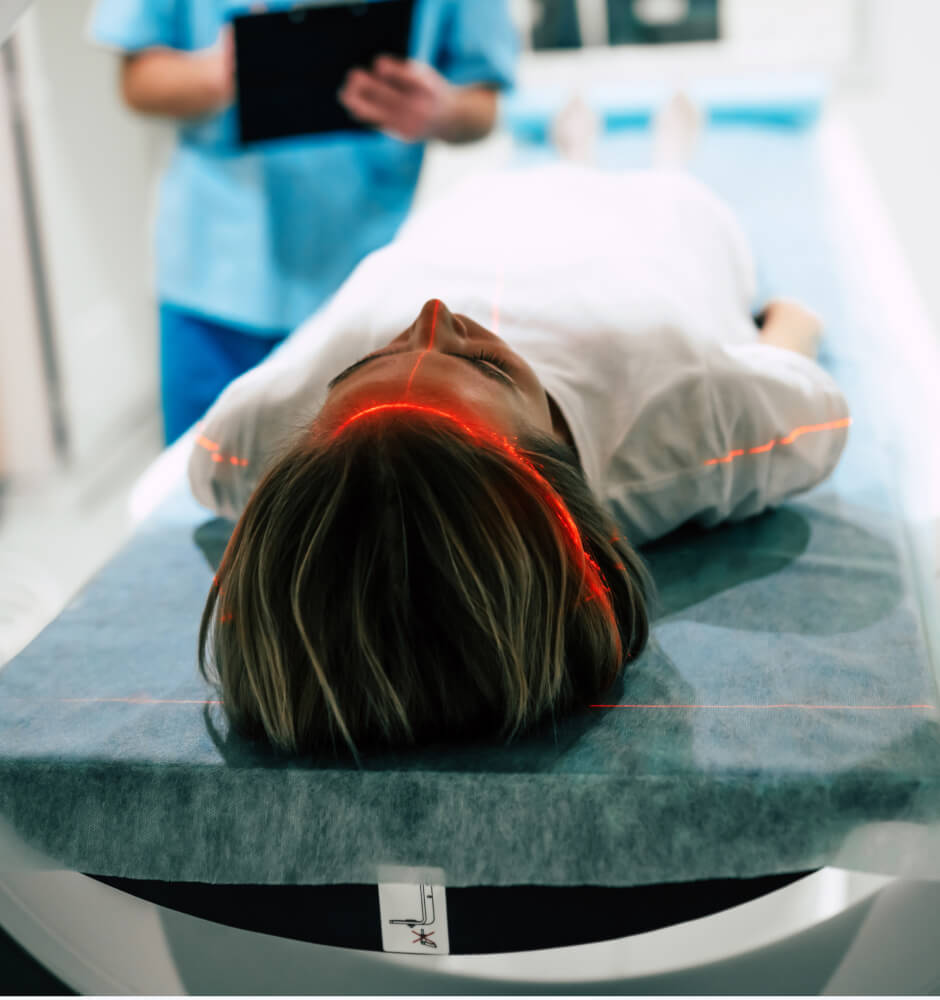
If you’ve been referred for an MRI scan, you may be surprised to learn that not every MRI machine is the same. Different systems can vary in magnetic field strength, design, patient experience, and the types of diagnostic imaging they support.
In this guide, we’ll look at Front-Open MRI, 1.5T High-Field Strength MRI, and 3T High-Field Strength MRI, including how they differ and what you might expect from each type of scanner.
What is an MRI?
MRI stands for magnetic resonance imaging. It is a diagnostic imaging method that uses a strong magnetic field, radiofrequency energy, and a computer to create detailed images of structures inside the body. Unlike X-rays and CT scans, MRI does not use ionizing radiation.
MRI is especially useful for viewing many types of soft tissue, including muscles, ligaments, cartilage, the brain, spinal structures, and joints. The images can help your healthcare provider evaluate injuries, symptoms, and other medical concerns.
How Does an MRI Work?
During an MRI scan, the magnetic field temporarily aligns hydrogen atoms in your body. Radiofrequency pulses affect that alignment, and the MRI system detects signals released as the atoms return toward their usual state. A computer processes those signals into detailed images that a radiologist can interpret.
Most people don’t feel anything from the magnetic field, though some notice mild warmth or brief tingling. The scanner makes loud knocking or tapping sounds while images are being taken, so you’ll be given earplugs or headphones. Because MRI uses a powerful magnet, you’ll also complete a safety screening before your scan to identify metal, implanted medical devices, or other factors that could affect the exam.
How Long Does an MRI Scan Take?
MRI scan times vary depending on the body part being examined, the imaging sequences needed, whether contrast is used, and the specific MRI machine. Your imaging team can give you a better idea of what to expect for your scheduled exam.
What is a Front-Open MRI?
A Front-Open MRI uses a more open design than a traditional enclosed MRI machine. That extra space may make the scan more comfortable for patients who experience claustrophobia, anxiety, mobility limitations, or difficulty tolerating an enclosed scanner.
The open design can also allow greater positioning flexibility for certain exams. Whether a Front-Open MRI is appropriate depends on the body part being evaluated and the imaging your provider needs.
Open MRI systems typically operate at a lower magnetic field strength than 1.5T or 3T scanners, which can mean longer scan times or less fine detail for some exams. For many studies, they still provide diagnostic-quality images.
What Are Front-Open MRIs Used For?
Front-open MRIs may be used for several types of diagnostic imaging, depending on the exam and clinical need. These may include:
- Brain or head imaging
- Spine and joint imaging
- Chest, abdominal, or pelvic imaging
- Imaging that requires a particular patient position
Your referring provider and imaging team can determine whether an open MRI is suitable for the area being examined.
Benefits of Front-Open MRIs
The main advantage of Front-Open MRI is patient access and comfort. The more open configuration may help people who feel anxious in enclosed spaces or have physical limitations that make traditional positioning difficult.
Expert MRI offers Front-Open MRI services for patients whose imaging needs are appropriate for this type of scanner.
1.5T High-Field Strength MRI
A 1.5T MRI machine uses a 1.5 Tesla magnetic field and is widely used for diagnostic imaging. Depending on the system, modern high-field MRI scanners may also have shorter or wider bores than older equipment, which can make positioning more comfortable for some patients.
A 1.5T system can provide detailed imaging across many areas of the body, including the brain, spine, joints, and soft tissues.
What Are the Benefits of a 1.5T MRI?
The 1.5T MRI is commonly used because it can provide detailed images for a broad range of examinations. Scan time and image quality depend on the exam type, imaging protocol, patient movement, and other clinical factors, not field strength alone. 1.5T is often preferred for patients with metal implants, surgical hardware, or certain implanted devices, because it typically produces fewer metal-related artifacts and more devices are approved for scanning at 1.5T.
The type of MRI ordered will depend on the exam and your provider’s imaging needs. Expert MRI offers High-Field Strength MRI for a range of diagnostic imaging applications.
3T High-Field Strength MRI
A 3T MRI uses a 3 Tesla magnetic field, which is twice the field strength of a 1.5T MRI. The stronger field can provide a higher signal-to-noise ratio, which may allow radiologists to obtain greater image detail or adjust scan parameters for certain examinations.
3T MRI can be useful for specialized brain, neurological, musculoskeletal, orthopedic, and other imaging applications when that level of imaging is clinically appropriate.
What Is the Difference Between a 1.5T and 3T MRI?
The clearest difference is magnetic field strength. A 3T MRI has twice the magnetic field strength of a 1.5T MRI. That does not automatically make 3T the right choice for every scan.
The appropriate MRI machine depends on the anatomy being examined, the imaging protocol, patient-specific factors, and the clinical question your provider is trying to answer.
Benefits of 3T MRI Machines
Depending on the exam, 3T MRI may offer advantages such as:
- Higher-resolution imaging for certain small or detailed structures
- Detailed brain and neurological imaging
- Detailed imaging of joints, cartilage, and ligaments
- Potential flexibility in balancing image detail and acquisition time
3T is not ideal for every patient. It can be more sensitive to artifacts from metal hardware, and some implants and devices are approved for scanning only at 1.5T.
How Is the Right MRI Machine Chosen?
You generally don’t need to choose an MRI machine yourself. Your referring provider orders the exam based on the area to be evaluated, and the imaging team can help determine the appropriate equipment and protocol.
Factors may include the body part being scanned, the level of detail needed, implanted devices or other MRI safety considerations, your ability to remain in a certain position, and whether you have concerns about enclosed spaces. If you’re worried about claustrophobia or positioning, mention it before your appointment so the imaging team can discuss available options.
Getting the Right MRI for Your Exam
Different MRI machines give imaging teams options. The right scanner depends on the clinical question, the body part being examined, safety considerations, and your individual needs during the exam. Knowing the differences between Front-Open, 1.5T, and 3T MRI can make the process feel more familiar before you arrive.
Expert MRI provides MRI and other diagnostic imaging services across Southern California. If you have an imaging order or questions about available MRI options, call (877) 674-8888 or find an Expert MRI location to learn more about scheduling and services near you. Available MRI equipment varies by location, so call to confirm which options are offered at the site nearest you.
Frequently Asked Questions About MRI Machines
Is an open MRI as effective as a traditional MRI?
An open MRI can provide useful diagnostic images for many examinations, but the appropriate scanner depends on what your provider needs to evaluate. Some exams may require a higher-field system or a specific imaging protocol. Your referring provider and imaging team can help determine the appropriate option.
Do I need to prepare differently for a 1.5T or 3T MRI?
Preparation usually depends more on the type of MRI exam than the machine’s field strength. Follow the instructions provided for your appointment. Always tell the imaging team about implanted medical devices, metal in your body, prior surgeries, pregnancy or possible pregnancy, and any other safety concerns before your scan.
Will I need contrast for my MRI scan?
Not every MRI requires contrast. Whether contrast is recommended depends on the body part being examined and what your healthcare provider needs to evaluate. If contrast is part of your exam, your care team can explain why it is being used and any preparation instructions. Let the team know if you have kidney disease or have had a prior reaction to MRI contrast.
What happens after the MRI scan?
A radiologist reviews the images and prepares a diagnostic report for the referring provider. Your provider can then discuss the findings with you and explain what they mean in the context of your symptoms and care.